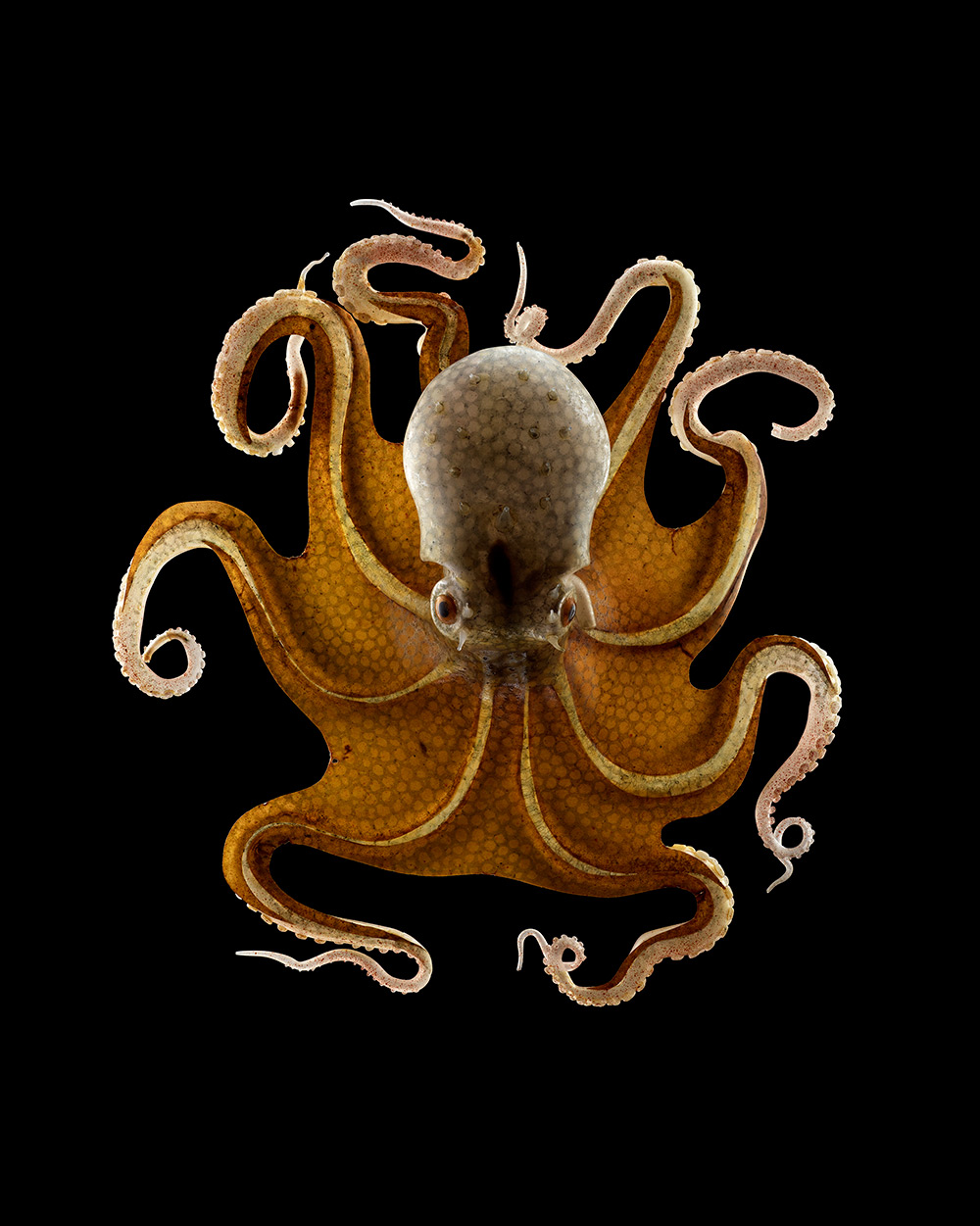
These glorious, life-like sea creatures and plants were intended as scientific models, but Victorian naturalist glassworkers Leopold and Rudolf Blaschka unwittingly made enduring works of art. The father and son team (Leopold Blaschka, May 27, 1822 – July 3, 1895, and Rudolf Blaschka, June 17, 1857 – May 1, 1939) created stunning, accurate representations that are now highly collectible.
In the late 18th and early 19th centuries, most universities used pressed and carefully-labeled natural specimens as teaching tools. However, once pressed, the specimens were rendered two-dimensional, and their preservation typically resulted in their losing their natural color. The idea of having the specimens rendered in lifelike glass initially came from royalty. in 1859, Prince Camille de Rohan commissioned Leopold to make 100 varieties of orchid in glass for his private collection. Those first specimens were displayed as a public spectacle, eventually getting the attention of universities and museums around the world. Among other collections, the plants created by the Blaschkas form the basis of the highly-regarded glass flowers collection in the Harvard Museum of Natural History.
In addition to his success at rendering plants in glass, Leopold, eventually joined by Rudolf, fulfilled many commissions making invertebrates out of glass for museums and universities. The pair acquired wet specimens from around the world, went on their own collection trips, and even built a small aquarium so they could work from life. The invertebrates were even more successful than their plants, since most people hadn’t ever seen the creatures outside of wet specimens. Experiencing the creatures in realistic color in lifelike poses made a big impression on the museum-going public, and the models clinched the Blaschkas title as the darlings of museums, universities, and high schools on both sides of the Atlantic.
You can see the astonishing glass creations by Leopold and Rudolf Blaschka in the Harvard Museum of Natural History, the Corning Museum of Glass, the London Natural History Museum, the Boston Museum of Science, and many, many other organizations.
Share:


 My OBT
August 19, 2019 at 7:28 am
Please don’t touch….Unbelievable…….Would so enjoy seeing this in real life.
LikeLiked by 1 person
August 19, 2019 at 8:53 am
They’re on display in a number of temptingly-close museums. I’m considering a pilgrimage to Cambridge to see the Harvard collection.
LikeLiked by 1 person
August 19, 2019 at 3:41 pm
Amazing stuff. I especially love the octopus and the jellyfish.
LikeLiked by 1 person
August 19, 2019 at 10:15 pm
They really are unbelievable!
LikeLiked by 1 person