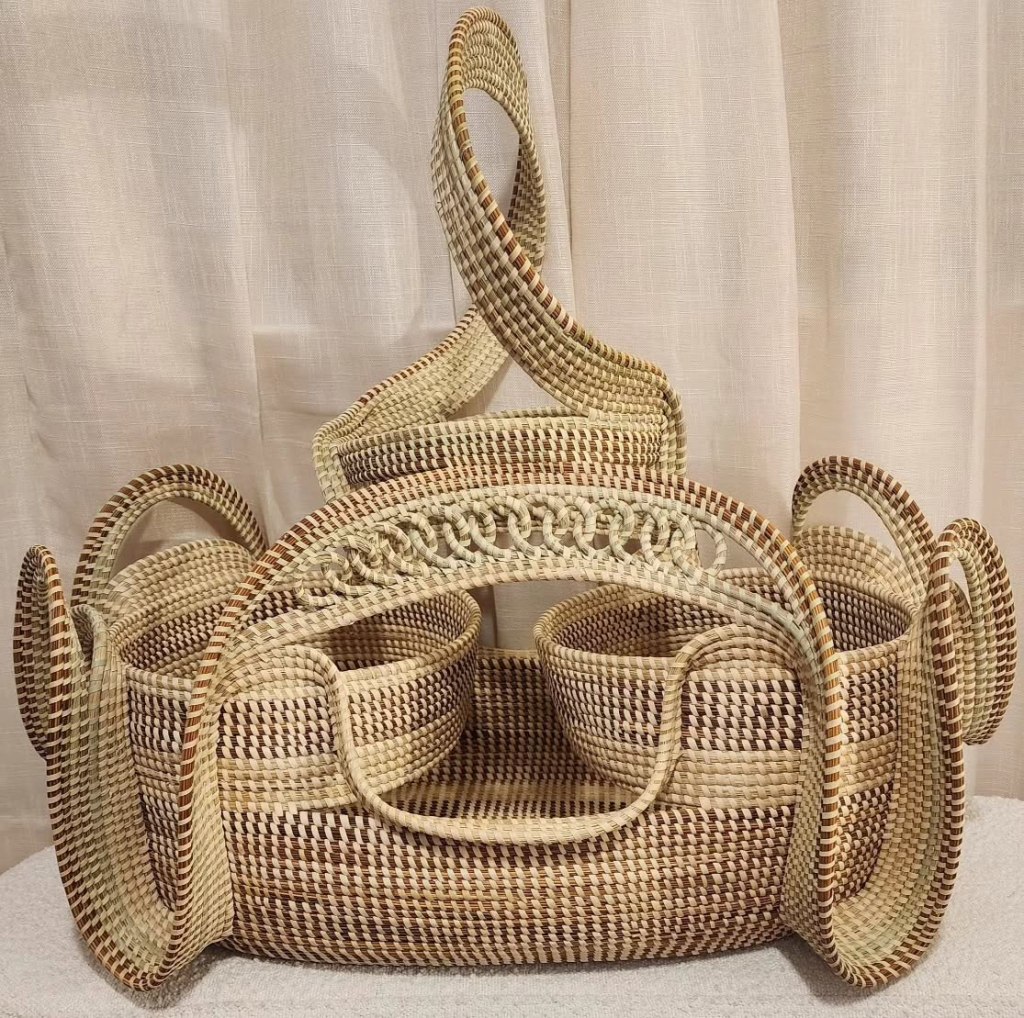
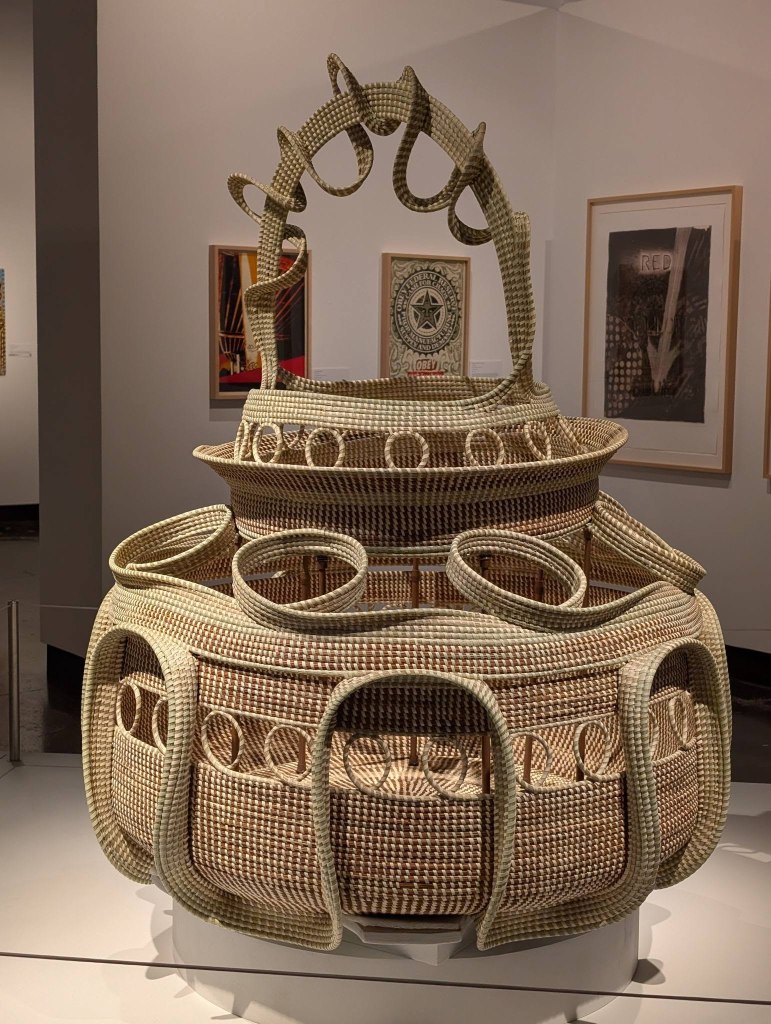
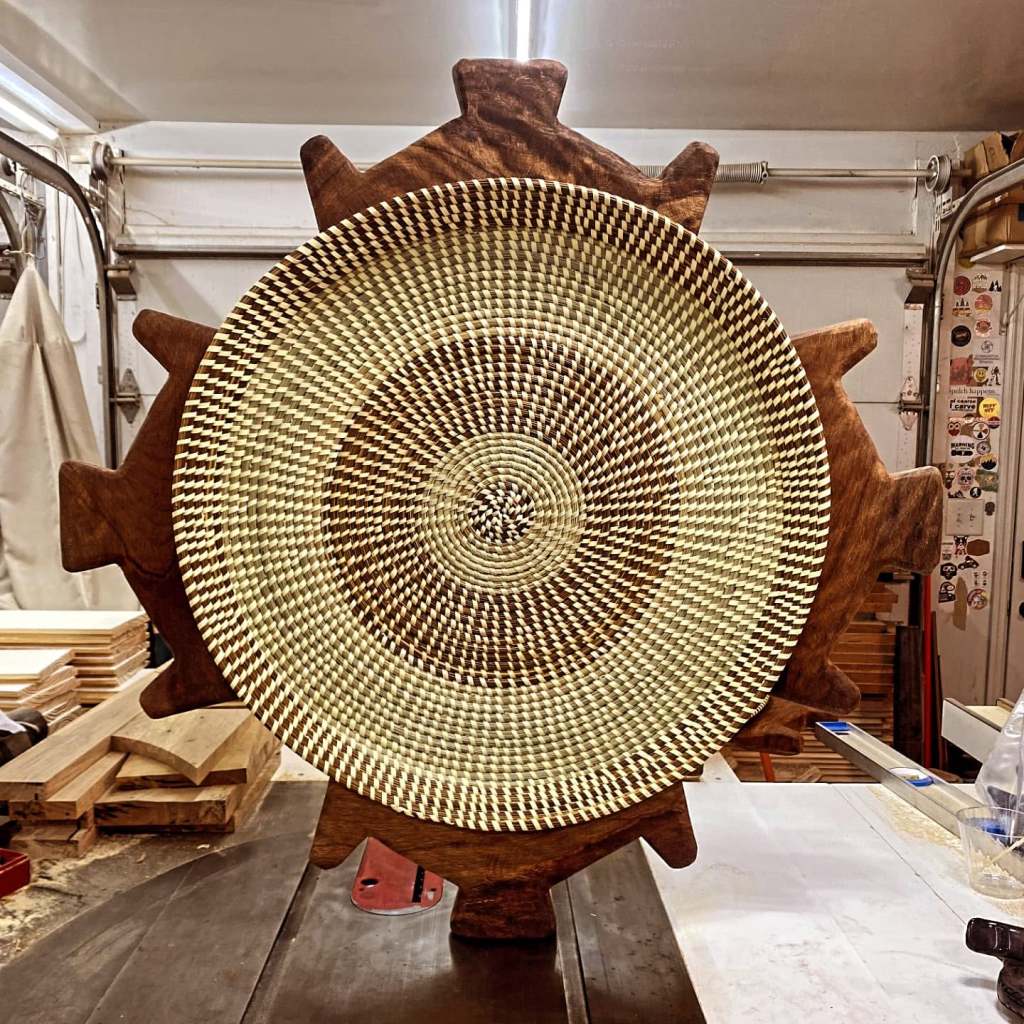
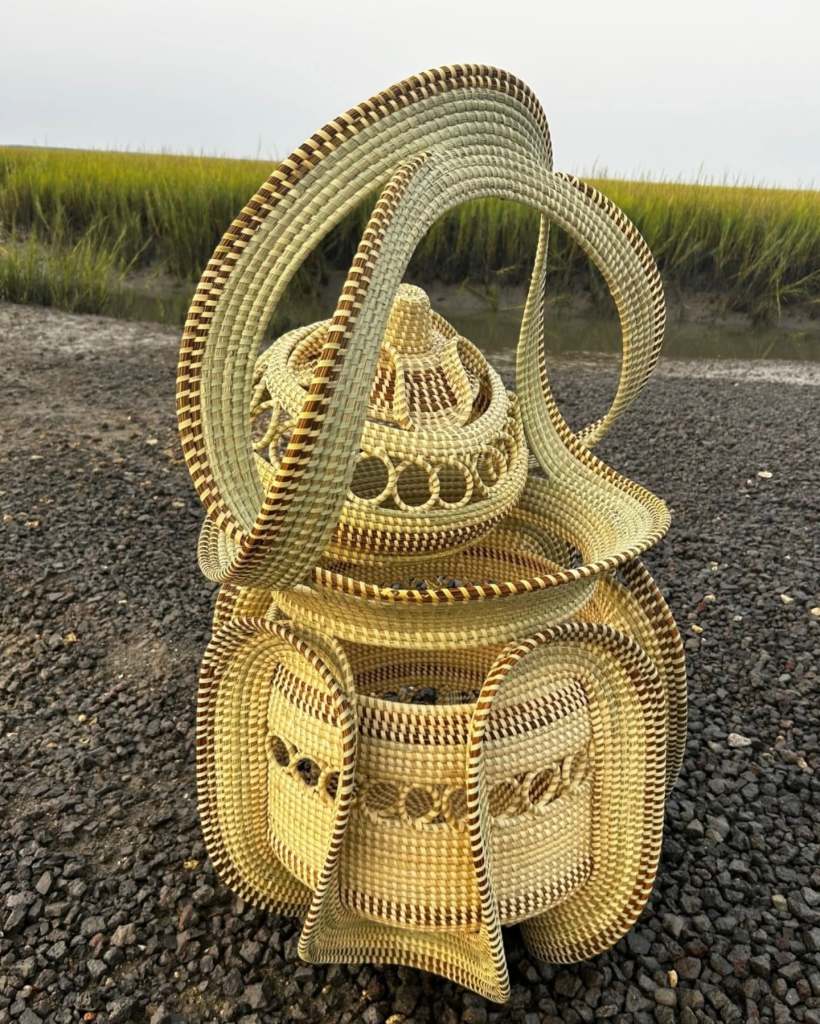
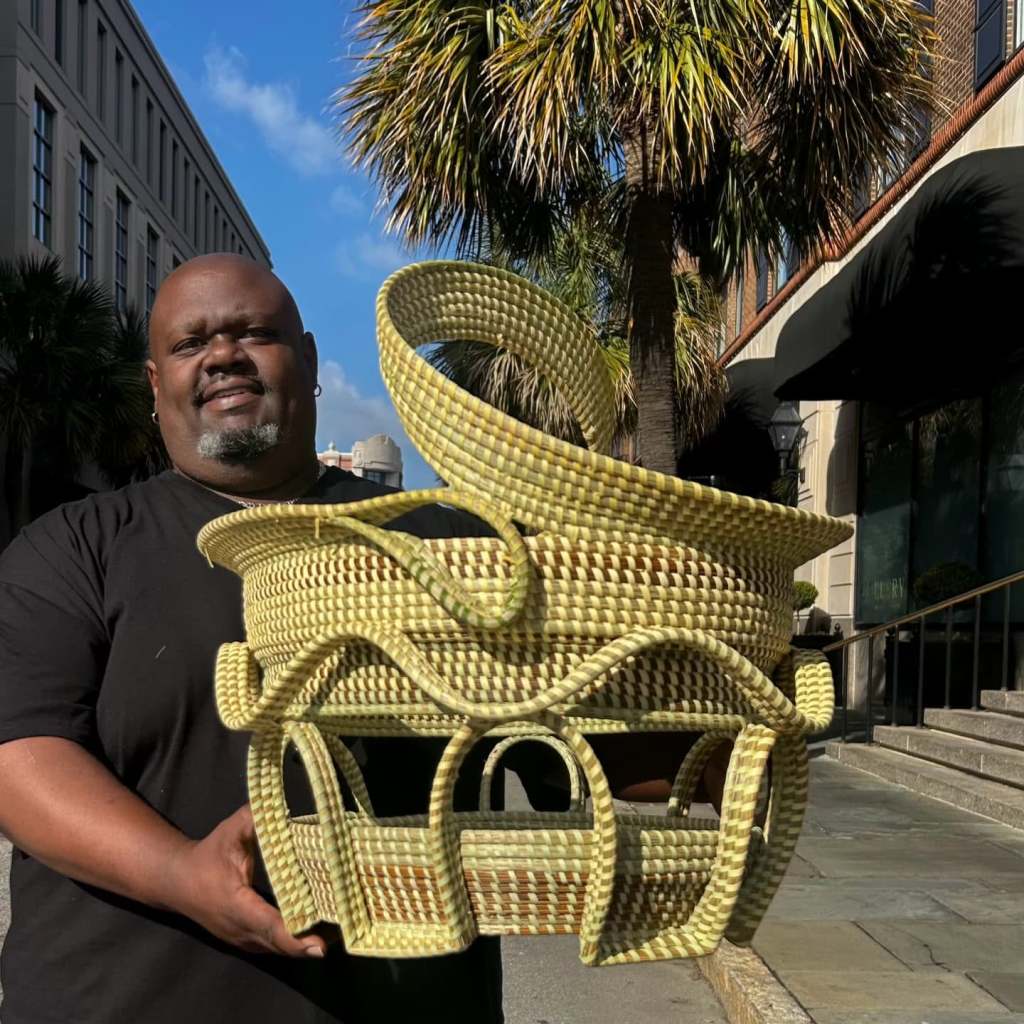
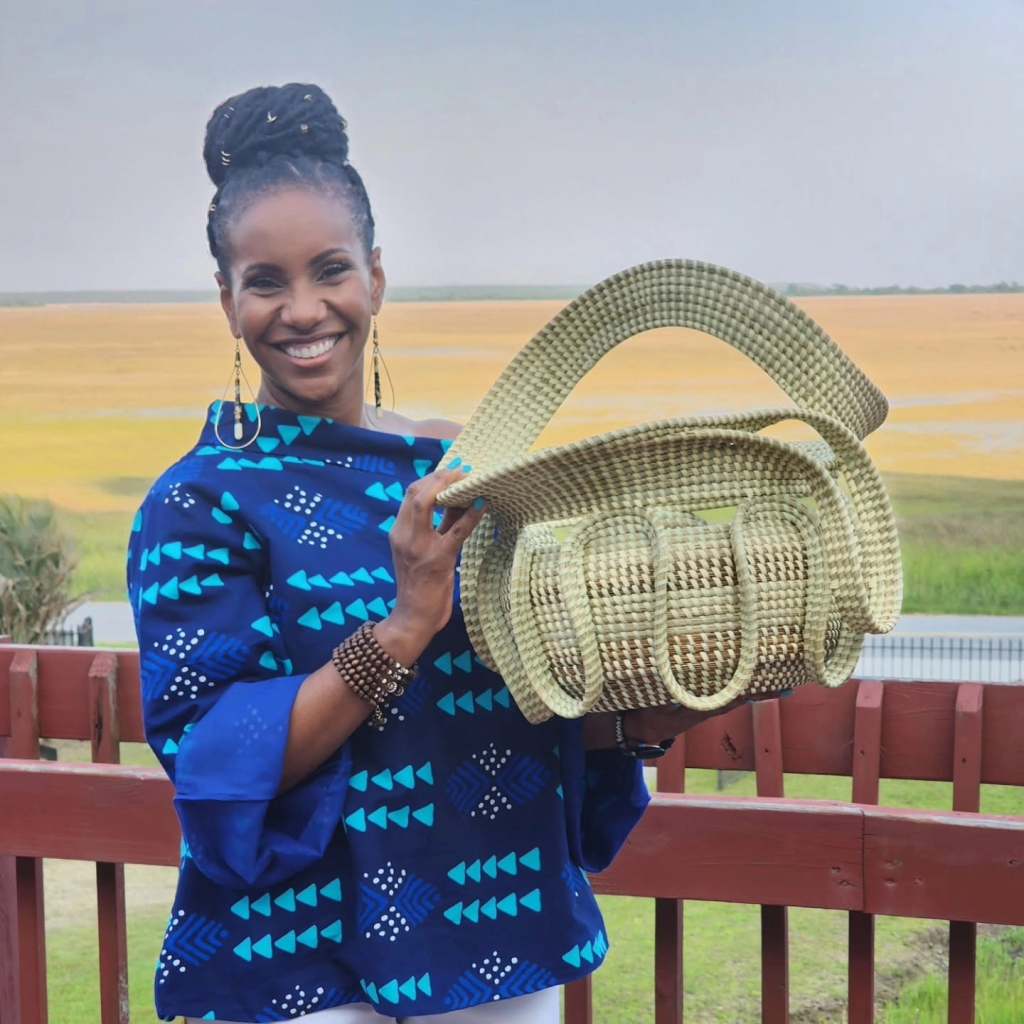
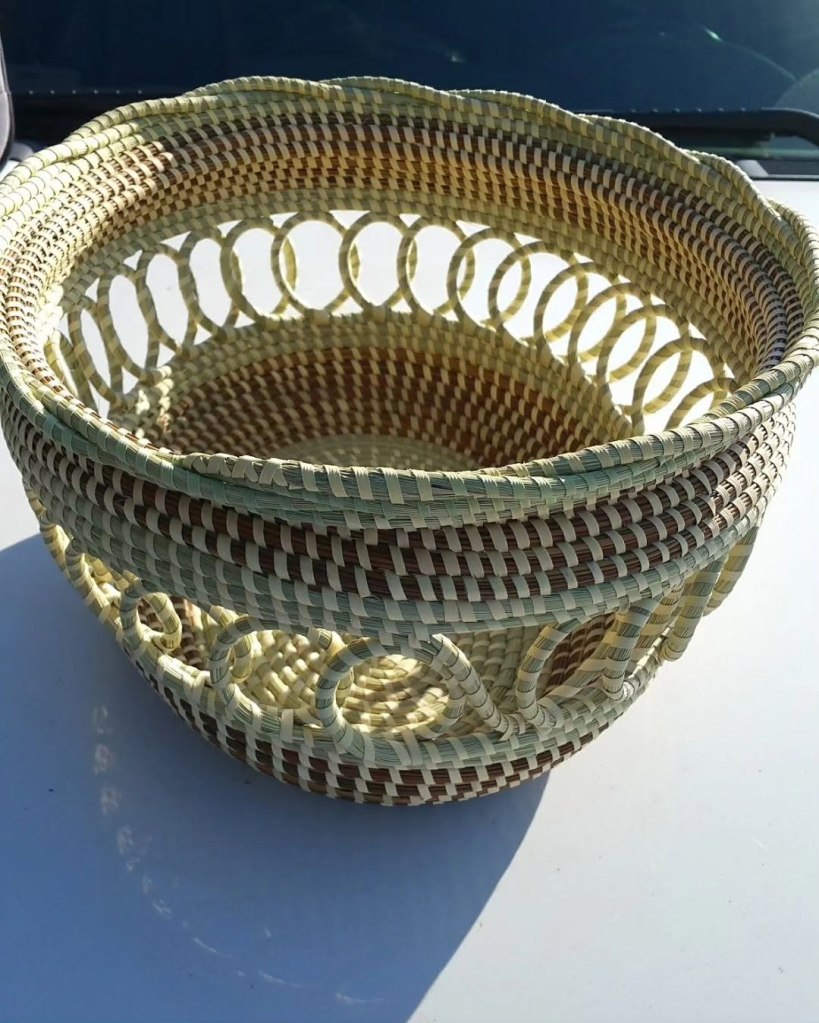
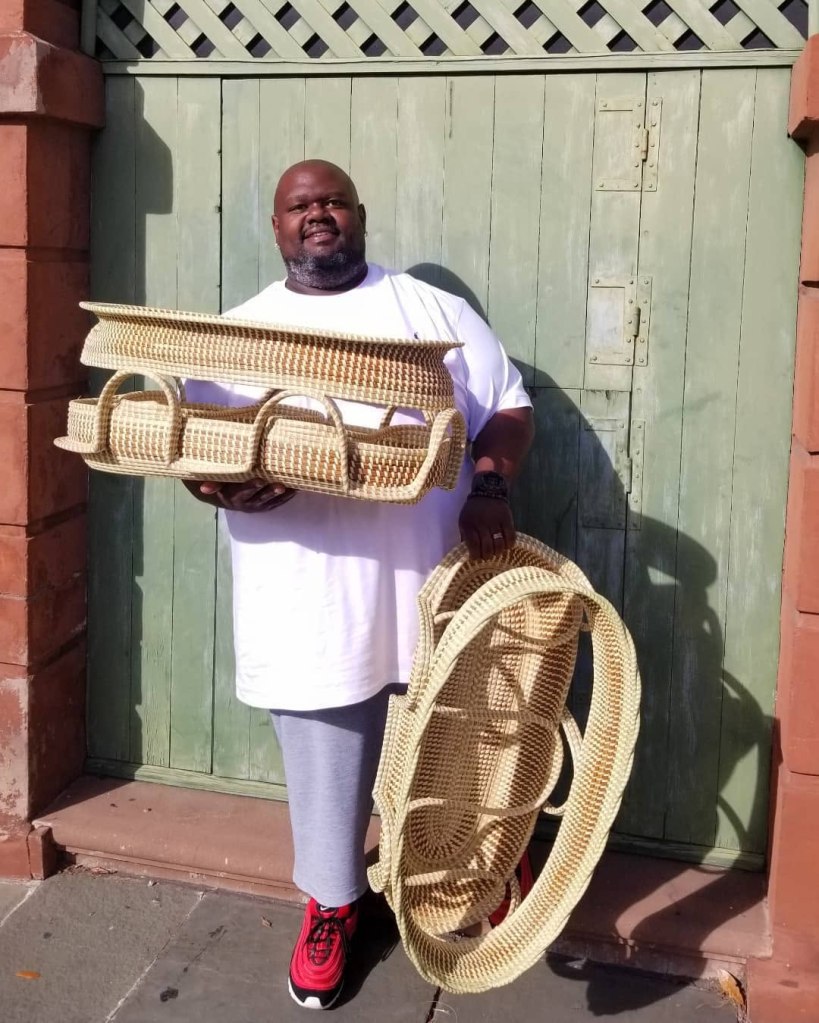
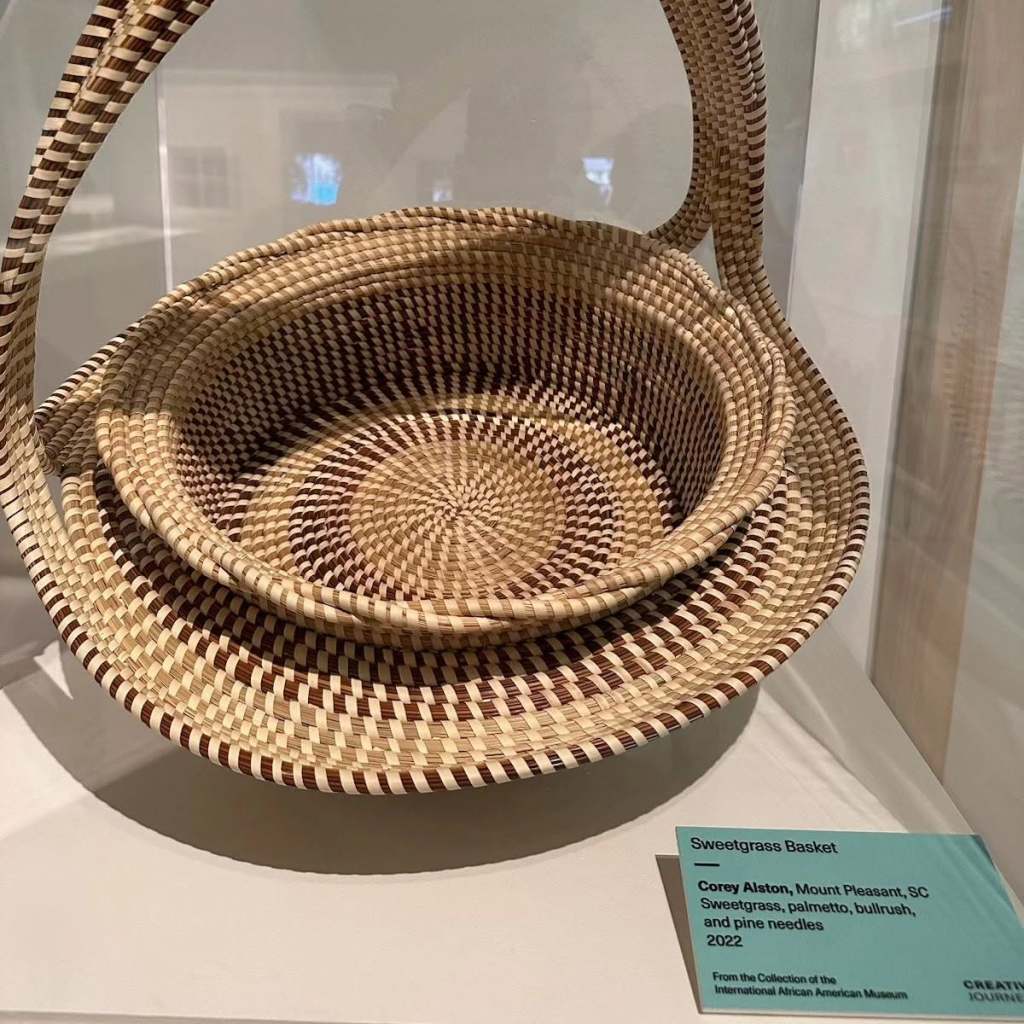
Master basket weaver Corey Alston’s interest in basket making comes from growing up in a family of five generations of artists and artisans. As with many Gullah Geechee families, the Alstons have a tradition of using basket weaving as a group family activity, so Corey learned the art form at a very early age. He uses a blend of bulrush, palmetto, pine needles, and Gullah Geechee sweetgrass local to his home of Charleston, SC to make his surprising creations. In case you are not familiar with the term, the Gullah Geechee are an African American ethnic group with its origins in enslaved Africans who were brought to the coastal areas of the Carolinas, Georgia, and Florida. Those ancestors, many who were from the rice-growing regions of Western Africa, brought with them their vast knowledge of basket sewing. After the abolition of slavery, because they were living in small island communities cut off from other towns by water, the Gullah managed to hang onto more of their African traditions and skills than their less isolated counterparts on the mainland.
Alston and his family are very invested in Gullah culture, and they offer educational classes not just on basket making but also about Gullah history and traditions.
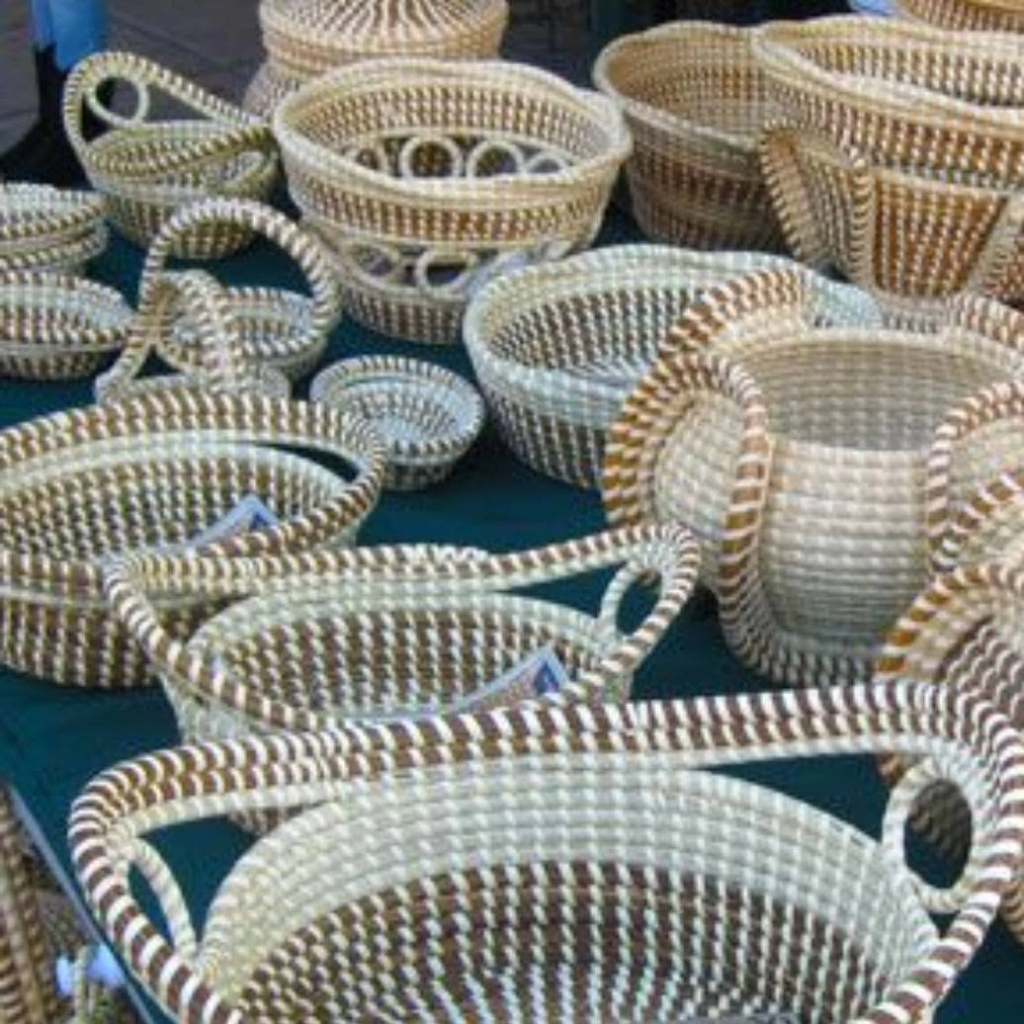
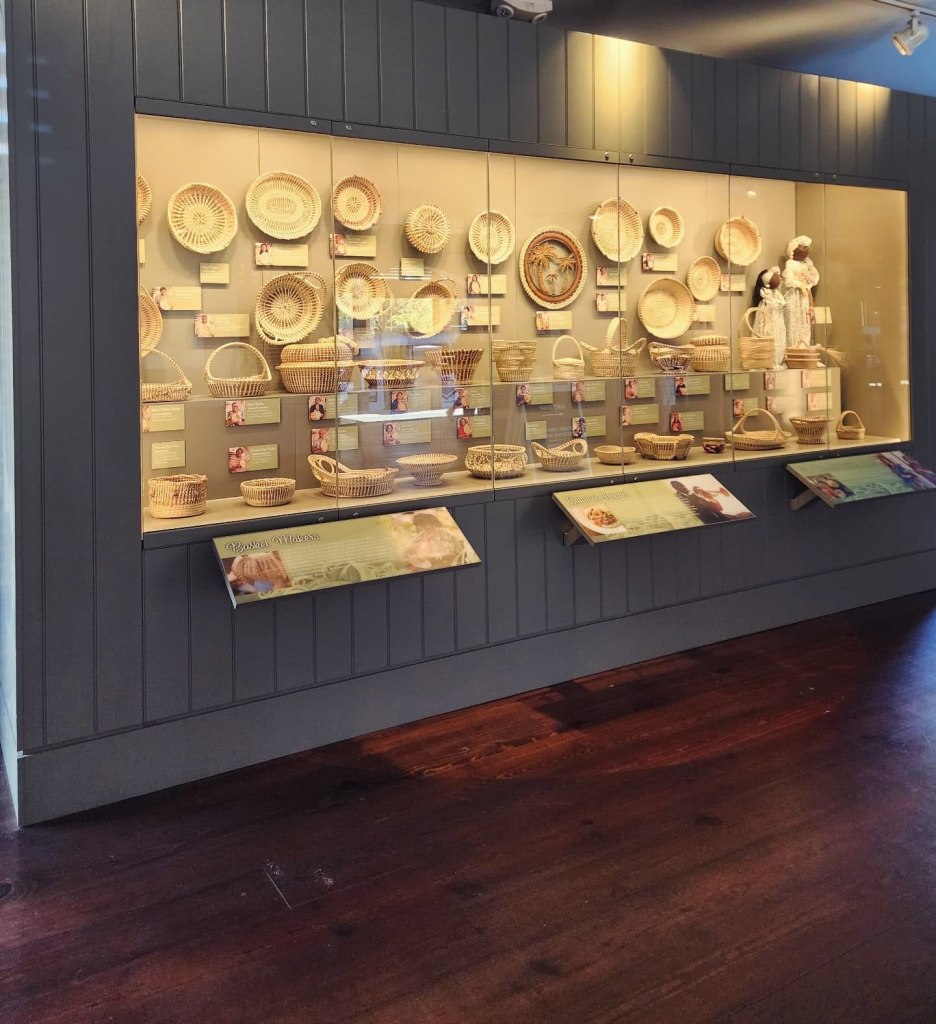
“Sweetgrass Basket Weaving has been a significant part of Gullah Geechee Culture, dating back to the days of enslavement. This coastal art form is recognized as a South Carolina State Handcraft and can be found along Sweetgrass Basket Makers HWY in South Carolina. This skill is one of the rare arts in our country, found nowhere else in America. Gullah Sweetgrass Baskets are a national treasure.”
You can follow Corey Alston on his website and on YouTube, Instagram, and Facebook.
Share:


October 13, 2026 at 6:42 am
The forms of the baskets are amazing! They are like the basket form of an Escher drawing. What I love even more is that this weaver and their family are keeping such a significant tradition alive.
LikeLike